
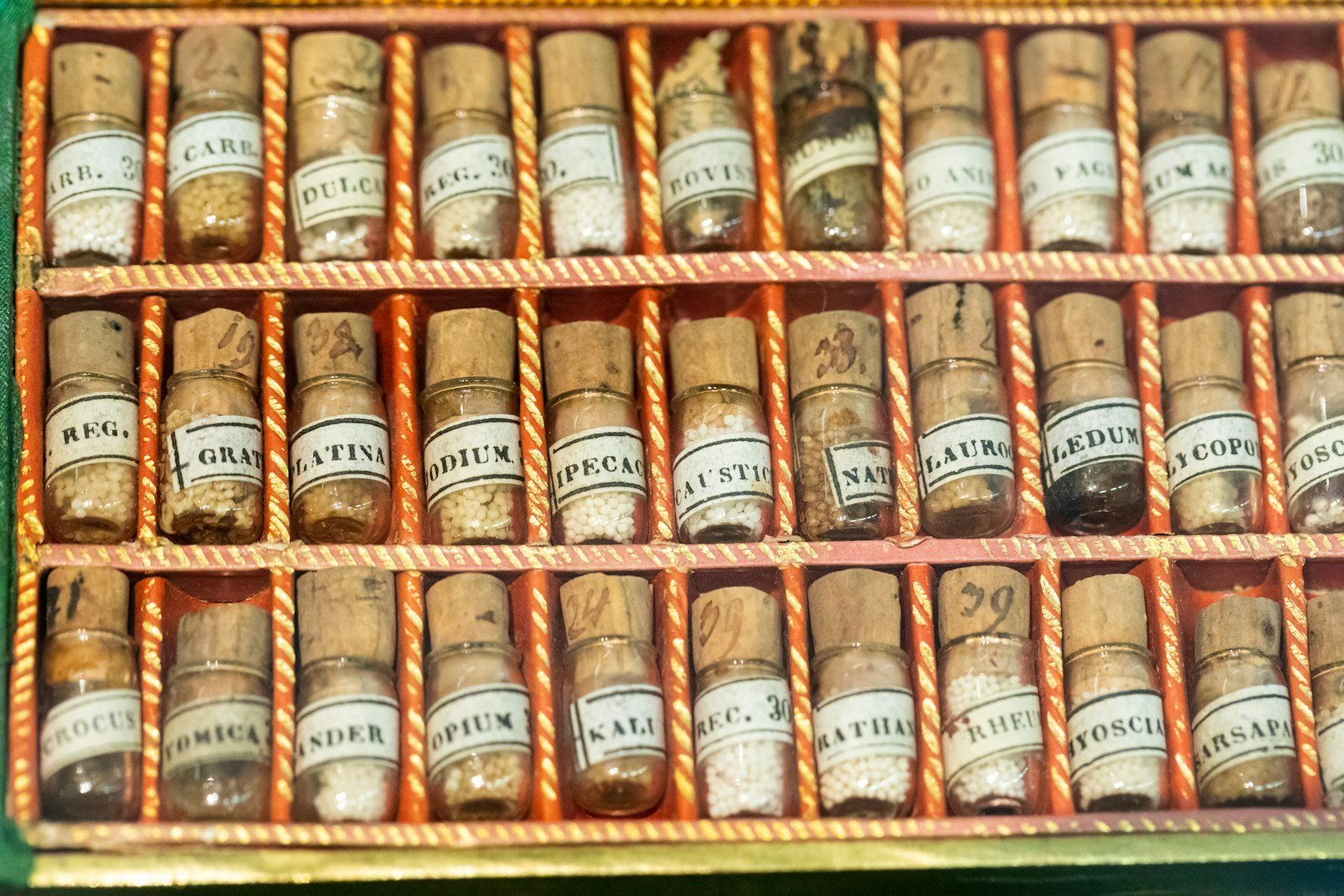
Few forms of health care are treated as differently from one country to the next as homeopathy. In some places it is a state-regulated medical system with its own colleges, councils and registers; in others it is simply a pharmacy product with no public funding at all.
The global picture
The World Health Organization's Global Report on Traditional and Complementary Medicine, published in 2019, drew on information from 179 of its Member States. It recorded steady growth in national policies and regulation over the previous two decades: 98 Member States reported a national policy on traditional and complementary medicine, and 109 had laws or regulations in this area. Homeopathy was listed among the most widely used practices, reported in 100 Member States. The report describes use and regulation; it does not assess whether homeopathy works.
India
India has the world's largest formal homeopathic system. Homeopathy falls under the Ministry of Ayush, which covers Ayurveda, Yoga and Naturopathy, Unani, Siddha, Sowa Rigpa and Homoeopathy. It began as a government department in 1995 and became a full ministry on 9 November 2014.
For nearly fifty years, education and practice were regulated by the Central Council of Homoeopathy under the Homoeopathy Central Council Act of 1973. The National Commission for Homoeopathy Act, 2020 replaced that arrangement, and the National Commission for Homoeopathy was constituted on 5 July 2021, the day the 1973 Act was repealed. The Commission oversees standards in homeopathic colleges and the registration of practitioners.
Bangladesh
In Bangladesh, homeopathic education and practice were governed for four decades by the Bangladesh Homoeopathic Practitioners Ordinance of 1983, under which a homeopathic board oversaw diploma courses and the registration of practitioners. Degree-level study is also available, including the Bachelor of Homeopathic Medicine and Surgery (BHMS) under the University of Dhaka.
On 2 November 2023 the Jatiya Sangsad passed the Bangladesh Homeopathic Medical Education Bill, 2023, which repeals the 1983 Ordinance. It provides for the existing board to be replaced by a council governed by a 17-member board of directors, responsible for supervising homeopathic treatment, services and medicines and for registering homeopathic physicians. A 10-member executive body, headed by a chairman, is to oversee standards in homeopathic education.
Pakistan
Pakistan recognised homeopathy under the Unani, Ayurvedic and Homoeopathic Practitioners Act of 1965, which set up a board for the homeopathic system that was later renamed the National Council for Homoeopathy. The Council regulates education and registration, accrediting the four-year Diploma in Homoeopathic Medicine and Surgery (DHMS) and the five-year BHMS degree.
European Union
Across the European Union, homeopathic medicines come under Directive 2001/83/EC, the main law on medicines for human use. It offers a simplified registration route for products that are taken by mouth or used externally, carry no therapeutic indication on the label, and are diluted enough to guarantee safety, in general to no more than one part per 10,000 of the mother tincture. Under this route manufacturers must document quality and safety, but proof of therapeutic efficacy is not required.
Germany
In Germany, Hahnemann's homeland, medicines law treats homeopathy as one of the "special therapeutic directions" alongside herbal and anthroposophic medicine. Many statutory health insurers have offered homeopathy as an optional extra benefit. In 2024 the federal health ministry proposed removing that option, but the provision was dropped from the draft law after political opposition. Within the medical profession the trend has run the other way: in May 2022 the German Medical Assembly voted to remove the additional qualification in homeopathy from its model training regulations, citing insufficient scientific evidence, and most regional medical chambers had already dropped it.
Switzerland
In a 2009 referendum, about two-thirds of Swiss voters backed a constitutional article on complementary medicine. Classical homeopathy, anthroposophic medicine, traditional Chinese medicine and herbal medicine were then covered by basic health insurance on a trial basis from 2012. From 1 August 2017 that coverage became permanent, on condition that the treatment is given by a medical doctor with recognised additional training in the discipline.
France
France had a long tradition of homeopathic use, and its national health insurance reimbursed homeopathic medicines, generally at 30 per cent. In June 2019 the Haute Autorité de Santé concluded that their clinical benefit was not enough to justify continued reimbursement. The rate fell to 15 per cent on 1 January 2020, and reimbursement ended entirely on 1 January 2021. The medicines remain on sale.
United Kingdom
In November 2017, after a public consultation, NHS England advised that homeopathy should no longer be prescribed by the health service, pointing to a review that found a lack of robust evidence of clinical effectiveness. The British Homeopathic Association challenged the decision, but the High Court dismissed the claim in 2018. The guidance applies to England. Homeopathy remains legal, practitioners work privately, and homeopathic products are still sold.
Australia
In 2015 the National Health and Medical Research Council published the results of its review of the evidence, concluding that there were no health conditions for which there was reliable evidence that homeopathy was effective. Homeopathy organisations disputed its methods, and the argument over the review has continued since.
United States
Homeopathic medicines hold an unusual place in American law: the Federal Food, Drug, and Cosmetic Act includes articles recognised in the Homoeopathic Pharmacopoeia of the United States in its definition of a drug. In 2019 the Food and Drug Administration withdrew its long-standing compliance policy for these products, and in December 2022 it issued final guidance on a risk-based approach, concentrating enforcement on products that pose the greatest risk to patients. Homeopathic products are not FDA-approved. Separately, in November 2016 the Federal Trade Commission said that health claims for over-the-counter homeopathic products must be supported by the same kind of scientific evidence as other health claims, or else must clearly tell consumers that there is no scientific evidence the product works and that the claims rest on homeopathic theories from the 1700s.
Latin America
Homeopathy has deep roots in Latin America. In Brazil, the Federal Council of Medicine recognised it as a medical specialty in 1980, and it entered the public health network in the early 1980s, later becoming part of the national policy on integrative and complementary practices adopted in 2006. In Mexico, an 1895 decree of President Porfirio Díaz created a national school of homeopathic medicine. In 1937 it became one of the founding institutions of the Instituto Politécnico Nacional, and today, as the Escuela Nacional de Medicina y Homeopatía, it trains doctors in both conventional medicine and homeopathy.
Recognition and evidence are separate questions
It helps to keep two questions apart. One is legal and administrative: whether a country licenses practitioners, regulates medicines or pays for treatment. The other is scientific: whether homeopathy works beyond placebo. Recognition in law does not settle the scientific question, and the withdrawal of public funding does not end a tradition that many people still use. Major scientific reviews, such as the NHMRC's, have found no reliable evidence of effectiveness, while homeopathy researchers and practitioners dispute those conclusions and continue to carry out studies. Patients are best served by clear information on both questions, and by care that works alongside conventional medicine rather than in place of it.
Conclusion
Around the world, homeopathy sits in very different places. In Bangladesh, India and Pakistan it is a regulated system of medicine with its own colleges and registers. In parts of Europe and Latin America it is a recognised or reimbursed complementary therapy, while public funders in countries such as the United Kingdom and Australia have stepped back from it. That patchwork is likely to continue for years to come. For patients in Bangladesh the practical points are simple: consult a registered practitioner trained at a recognised college, ask questions freely, and let homeopathic and conventional care work together rather than compete.